


Roronoa Zoro currently carries three swords — Wado Ichimonji, Sandai Kitetsu and Enma. Across the series he has owned five named blades in total: the two he lost or gave up were Yubashiri, destroyed at Enies Lobby, and Shusui, which he returned to Wano. Each sword has its own name, grade and origin story, and every one of them is tied to a moment that changed Zoro.
Zoro’s Swords at a Glance
If you only want the list, here it is in the order Zoro obtained each blade. The grades come from the in-universe ranking system that sorts every meito (named sword) into tiers: Saijo O Wazamono (12 Supreme Grade), O Wazamono (21 Great Grade), Ryo Wazamono (50 Skillful Grade), and Wazamono.
| Sword | Grade | Status |
|---|---|---|
| Wado Ichimonji | O Wazamono (21 Great Grade) | Still carried |
| Sandai Kitetsu | Ryo Wazamono (50 Skillful Grade) | Still carried |
| Yubashiri | Ryo Wazamono (50 Skillful Grade) | Destroyed at Enies Lobby |
| Shusui | O Wazamono (21 Great Grade) | Returned to Wano |
| Enma | O Wazamono (21 Great Grade) | Still carried |
Before any of those, Zoro fought with two ordinary katana he never named — the pair he carries out of Shimotsuki Village alongside Wado Ichimonji at the very start of the East Blue. They break during the fight with Dracule Mihawk at the Baratie, and that is the reason the Loguetown shop scene exists at all: he arrives needing two replacements, not one. Nobody counts those two among “Zoro’s swords” because the series never gives them names, but leaving them out makes the Loguetown arc look like shopping rather than rebuilding.
Two threads run through the named list. The first is that Zoro never picks a sword casually: he takes Wado Ichimonji as a promise, Sandai Kitetsu as a dare, and Enma as a debt. The second is that his blades keep leading back to Wano — the country that produced Shusui, Enma, and the swordsmith behind Wado Ichimonji. If you want the wearable side of the character rather than the lore, you can browse the full Zoro collection, and our Zoro cosplay guide breaks his outfit down arc by arc.
Wado Ichimonji: Zoro’s First Sword
Wado Ichimonji is the pale one — a white sheath, a white hilt wrapping, and a straight, clean silhouette that stands out against the darker blades Zoro picks up later. The name reads roughly as “way of harmony, straight line,” and the sword lives up to it: it is the least dramatic blade he carries and the one he has never once considered giving away.
It did not start as his. Wado Ichimonji belonged to Kuina, the dojo daughter who beat Zoro two thousand times and then died in an accident before he could beat her once. Her father Koshiro handed Zoro the sword afterwards, and that transfer is the reason the promise exists at all: one of them would become the world’s greatest swordsman, and since only one of them was left, the obligation was no longer shared.
Mechanically it ranks as an O Wazamono, one of the 21 Great Grade blades — high, but not the highest tier in the setting. That gap between its ranking and its importance is the point. Wado Ichimonji is not the strongest sword Zoro owns; it is the one he would lose an arm before dropping. It was forged by Shimotsuki Kozaburo, a Wano swordsmith who later left the country — a detail that quietly connects Zoro’s first sword to the one he receives hundreds of episodes later.
Sandai Kitetsu: The Cursed Blade
Every Kitetsu blade carries the same reputation: the smith who made them poured something ugly into the steel, and their owners tend to die badly. Sandai Kitetsu — the third-generation Kitetsu — is the cheapest and lowest-ranked of the line at Ryo Wazamono, one of the 50 Skillful Grade swords, and the shopkeeper in Loguetown tried to talk Zoro out of it precisely because of the curse.
Zoro’s response is the scene everyone remembers. He throws the sword into the air, holds his arm out beneath the falling blade, and tells the curse to try its luck. The sword spins past his wrist without cutting him. His line afterwards — that he will use it, and that they will see whose will is stronger — is the cleanest statement of his whole character the series ever gives.
Worth being precise about how the curse actually works, because it is often overstated: nothing in the story shows the blade acting on its own. What it does is reward a wielder strong enough to hold it and destroy one who is not. Zoro is not immune — he simply refuses to be the second kind. That is also why Kitetsu, the lowest-graded of his blades, is the one he never swaps out.
Yubashiri: The Sword Zoro Lost
Yubashiri is the blade most “Zoro’s three swords” lists skip, and leaving it out makes the story incoherent — for a long stretch of the series it is one third of his set. He received it in the same Loguetown shop as Sandai Kitetsu, given free by the shopkeeper Ippon-Matsu as an apology after the Kitetsu stunt. It is a black-bladed Ryo Wazamono, light and fast, and Zoro used it through Alabasta, Skypiea, Water 7 and Enies Lobby.
It did not survive. During the Enies Lobby raid, the Marine officer Shu — who ate a Devil Fruit that rusts anything he touches — put a hand on the blade and corroded it beyond repair. Zoro kept carrying the ruined sword afterwards rather than dropping it, which is the closest the series comes to letting him grieve on screen. Yubashiri is why the Thriller Bark arc has an empty third slot to fill.
Shusui: The Sword Zoro Gave Up
Shusui is a black blade — not painted black, but a kokuto, a blade darkened by having been fed enough combat and haki over the years to permanently change. It belonged to Ryuma, the legendary Wano samurai, and it sat in a museum on Thriller Bark until Zoro defeated Ryuma’s reanimated corpse and was given the sword as a warrior’s due.
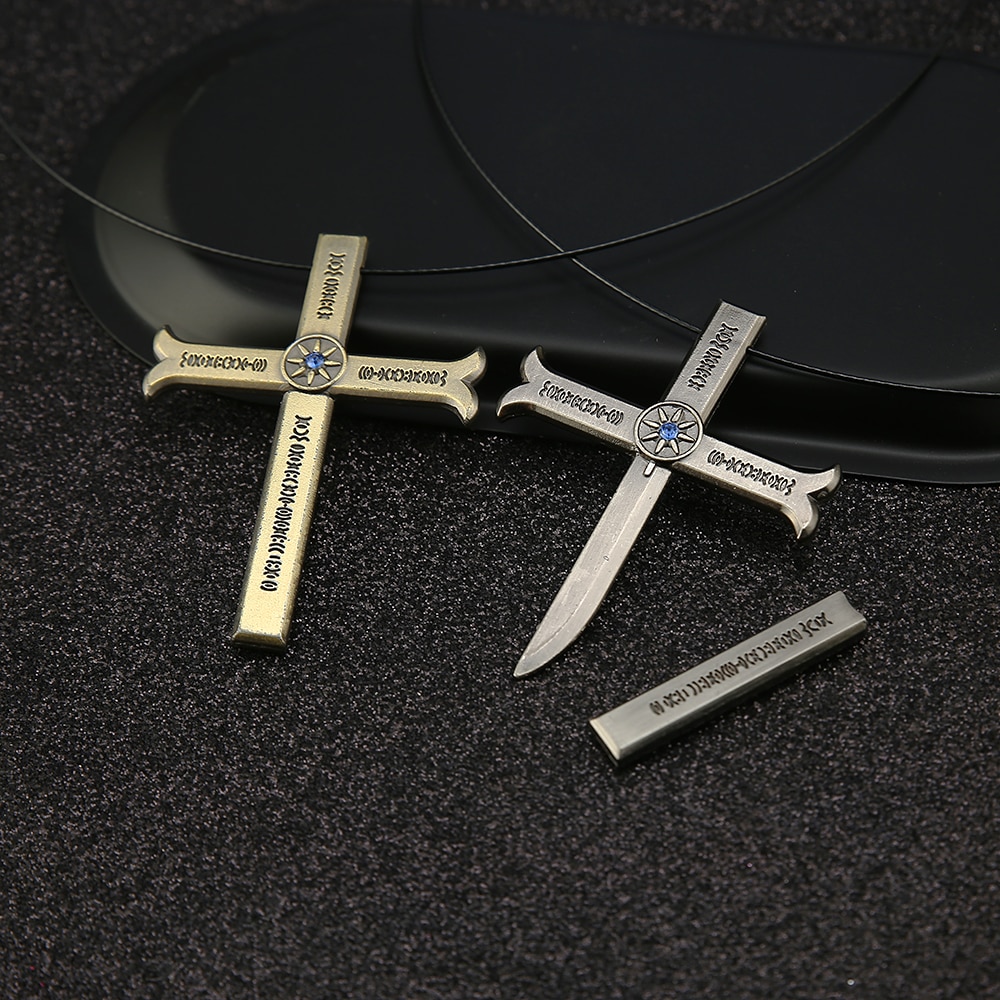
It ranks as an O Wazamono, one of the 21 Great Grade blades, and for the whole post-timeskip stretch it was Zoro’s heaviest hitter. Then Wano happened. In Wano, Shusui is not a trophy — it is a national treasure that was stolen from Ryuma’s grave, and the country notices immediately that a foreigner is carrying it.
Zoro gives it back. Not under pressure and not as a trade he negotiated: he simply decides the sword belongs in the country that made it, and hands it to Hitetsu to be returned to Ryuma’s grave. It is a small scene that does a lot of work — it is the moment Zoro stops being a swordsman who collects blades and becomes one who understands what they mean to the people they came from.
Enma: The Sword That Demands Haki
Enma came from Kozuki Hiyori, who offered it in exchange for Shusui, and before that it belonged to her father Kozuki Oden — the man who left two scars on Kaido, the only wounds the strongest creature in the world ever kept. It is an O Wazamono, and it was forged by Shimotsuki Kozaburo, the same smith who made Wado Ichimonji. Zoro’s first sword and his current strongest came from the same hands, which is the kind of detail the series plants early and collects on much later.
What makes Enma different from every other sword in the series is that it does not wait to be used. It pulls haki out of whoever holds it — as much as it can take, whether or not the wielder meant to give it. The first time Zoro draws it he takes a chunk out of a hillside by accident and nearly empties himself doing it. Most swordsmen would call that a defect. Zoro treats it as a training partner: the sword demands more than he can spare, so he learns to spare more.
That is the setup for Onigashima. Against Kaido, Enma is what lets Zoro land a cut that a Great Grade blade in ordinary hands could not, and the strain of it is also what nearly kills him. When the choice comes to take Shusui back or keep the sword that keeps trying to drain him, he keeps Enma. For more of the characters wrapped up in that arc, shop the One Piece character collection.
Santoryu: Why Zoro Carries Three Swords
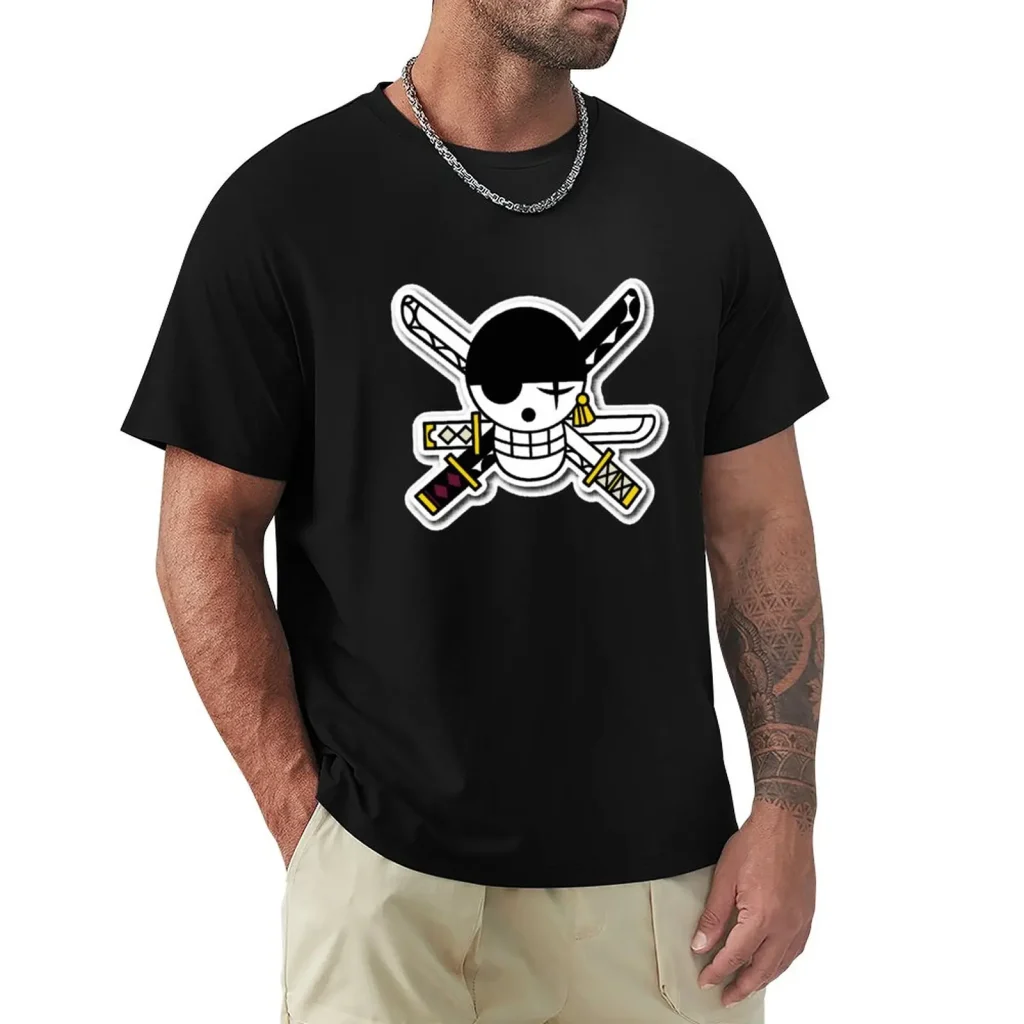
Santoryu — Three-Sword Style — is Zoro’s own invention, built as a child in Koshiro’s dojo by adding a third blade held horizontally in his teeth to the standard two-sword stance. It started as a way to beat Kuina and became the only fighting style in the series that requires a specific number of named swords to function at full strength.
The named attacks follow the arithmetic. One sword gives him Ittoryu techniques, two give Nitoryu, three unlock the Santoryu set — Oni Giri, Tora Gari, and eventually the Asura forms where he appears to hold nine blades at once. Losing a sword does not disarm him; it demotes him, which is precisely why Yubashiri’s destruction mattered and why the Thriller Bark slot had to be filled.
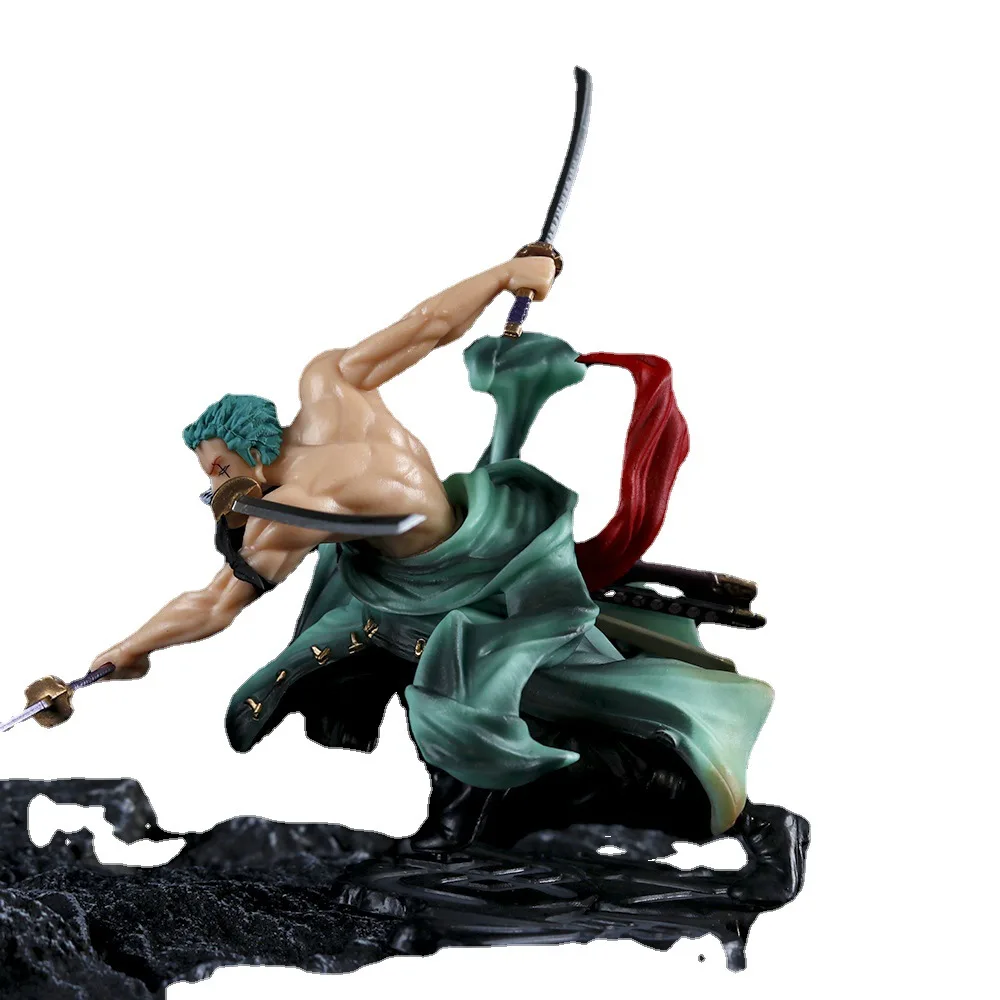
It also explains why which swords he carries is not interchangeable. A blade that fights the wielder, like Kitetsu, and a blade that drains the wielder, like Enma, would be a bad pairing for almost anyone else. Zoro built a style that turns both into training. A posed Zoro action figure is the easiest way to see the stance properly — the mouth grip is the part flat artwork tends to hide.
Zoro Sword Replicas and Cosplay Props
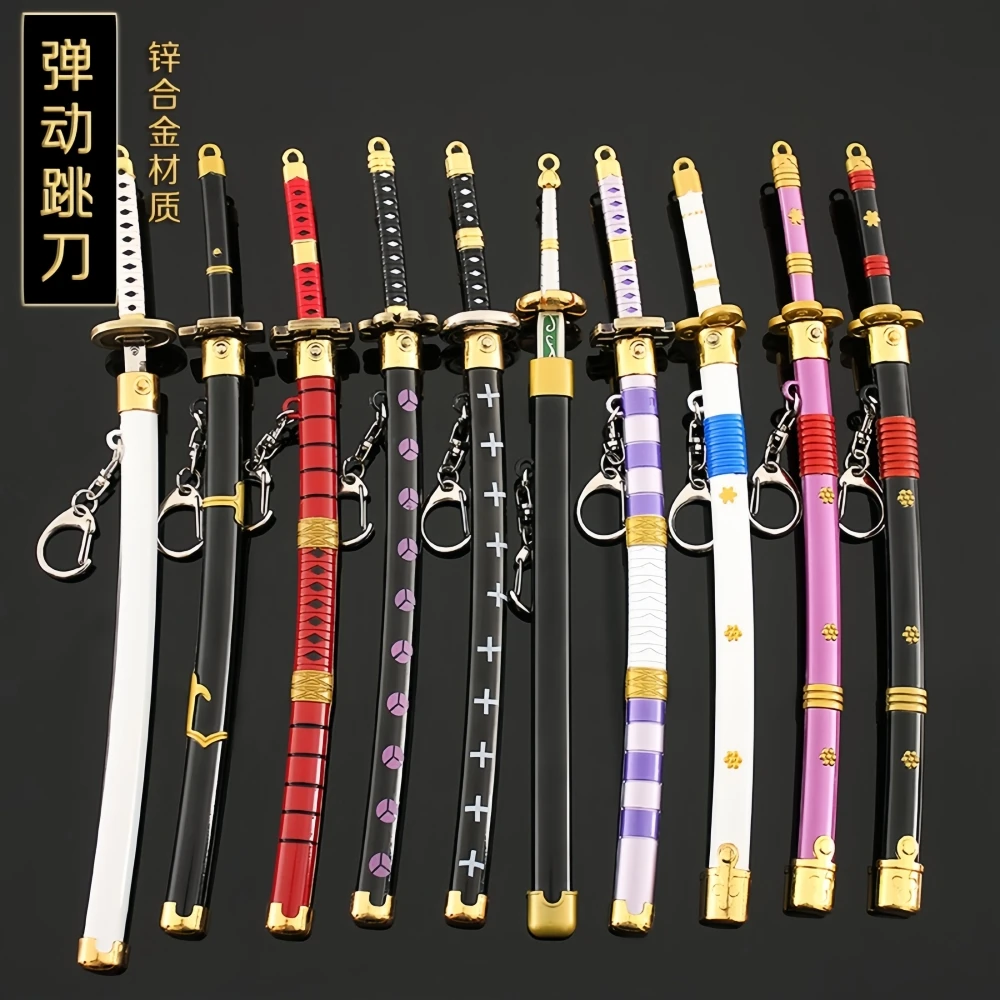
Once you know the four blades apart, buying something that represents them gets easier — and the market splits into three very different things that often get lumped together.
- Display models. Small metal or resin katana on a stand, typically 20–25 cm. They are ornaments for a desk or shelf: not sharp, not full length, not built to be handled.
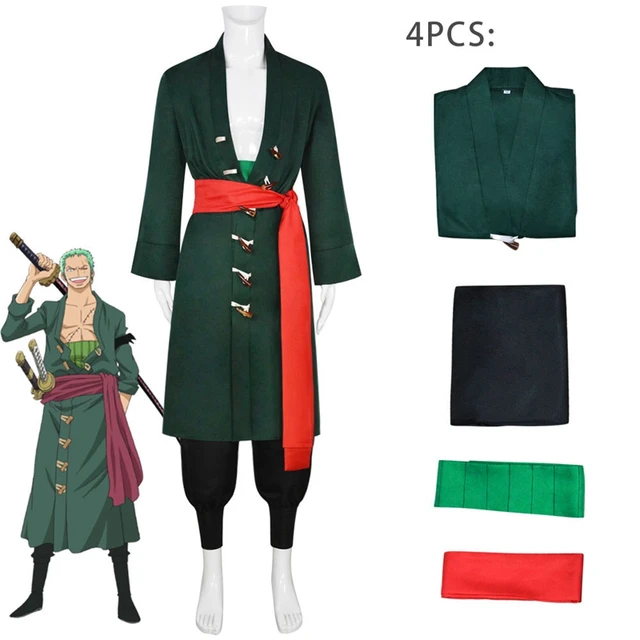
- Cosplay props. Wood, foam or rubber, usually near full length, made to be carried in costume. Blunt by design.
- Functional replicas. Actual steel, made by specialist swordsmiths. These are a different purchase entirely, with their own storage and legal considerations, and they are not what an anime merch shop sells.
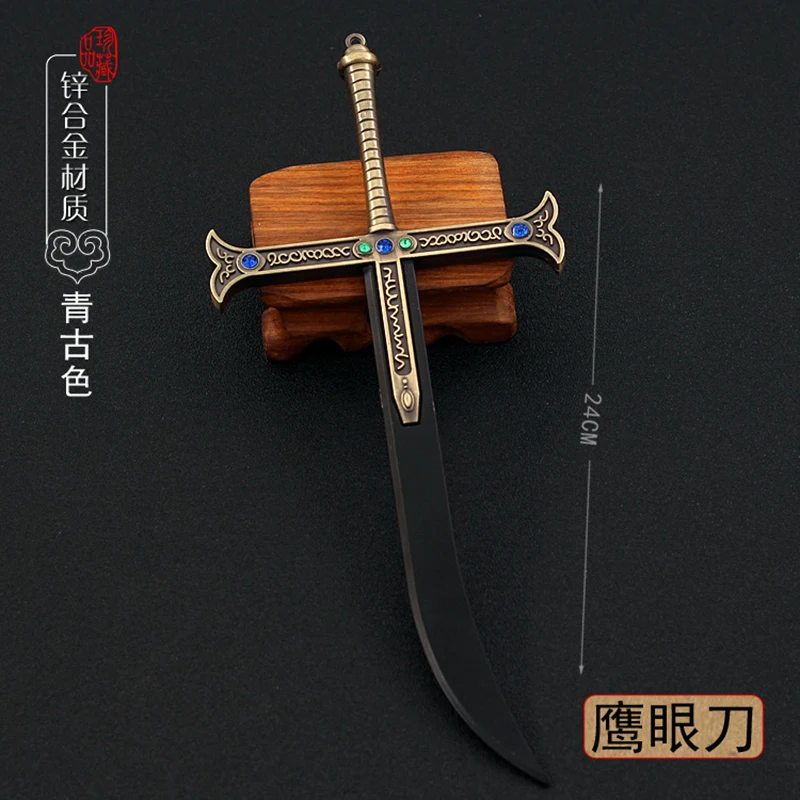
Scale is where most people get caught out. A display model listed at 23 cm is roughly the length of a forearm — it looks substantial in a product photo shot against a plain background and considerably smaller on a shelf next to a book. A real katana is closer to 100 cm overall, so a full-length cosplay prop is four times the model and needs somewhere to live between conventions. If you are matching a specific blade rather than buying a generic katana, the details worth checking in the listing are the hilt wrapping colour, whether the sheath is pale or dark, and whether the guard is round or squared — those three things are what separate one of Zoro’s swords from another at a glance.
Nothing sold as anime merchandise is a reproduction endorsed by the rights holders, and no shop can tell you a prop is legal to carry where you live — rules on blunt replicas vary by country, by state and sometimes by venue, and conventions usually publish their own weapons policy separately. Check both before you travel with one. Our mini katana guide covers sizing and display in more detail, and the Demon Slayer sword guide does the same for Nichirin blades if your shelf is not exclusively One Piece.
FAQ: Zoro’s Swords
The questions that come up most often about Zoro’s blades, answered briefly.
How many swords does Zoro have?
Three at a time — that is what Three-Sword Style requires. Across the series he has owned five named swords in total: Wado Ichimonji, Sandai Kitetsu, Yubashiri, Shusui and Enma. Two are no longer with him.
What are the names of all of Zoro’s swords, in order?
Wado Ichimonji (from Kuina, his first), Sandai Kitetsu and Yubashiri (both from the Loguetown shop), Shusui (won on Thriller Bark), and Enma (given by Kozuki Hiyori in Wano). His current set is Wado Ichimonji, Sandai Kitetsu and Enma.
Which of Zoro’s swords is the strongest?
By grade, three of them tie: Wado Ichimonji, Shusui and Enma are all O Wazamono, the 21 Great Grade tier. Sandai Kitetsu and Yubashiri sit one tier below at Ryo Wazamono. In practice Enma has produced his most destructive results, because of what it pulls out of him rather than what the steel is rated at.
Why did Zoro give up Shusui?
Shusui was taken from the grave of Ryuma, a Wano national hero, and in Wano it is treated as a stolen treasure rather than a prize. Zoro returned it so it could stay in the country that made it, and accepted Enma from Kozuki Hiyori in its place.
What happened to Yubashiri?
It was destroyed at Enies Lobby by the Marine officer Shu, whose Devil Fruit rusts whatever he touches. Zoro carried the corroded blade off the island rather than leaving it behind, and later buried it.
Can I buy a replica of Zoro’s swords?
You can buy display models and cosplay props inspired by his blades — small metal katana for a shelf, or blunt wood and foam versions for costume use. They are props and ornaments rather than reproductions endorsed by the rights holders. Check your local rules on carrying replicas, and any convention’s own weapons policy, before taking one out of the house.